
Home
/
Tech
/
Beyond WordPress: Global Security Flaws Prompt Urgent Website Upgrades in South Africa
Beyond WordPress: Global Security Flaws Prompt Urgent Website Upgrades in South Africa
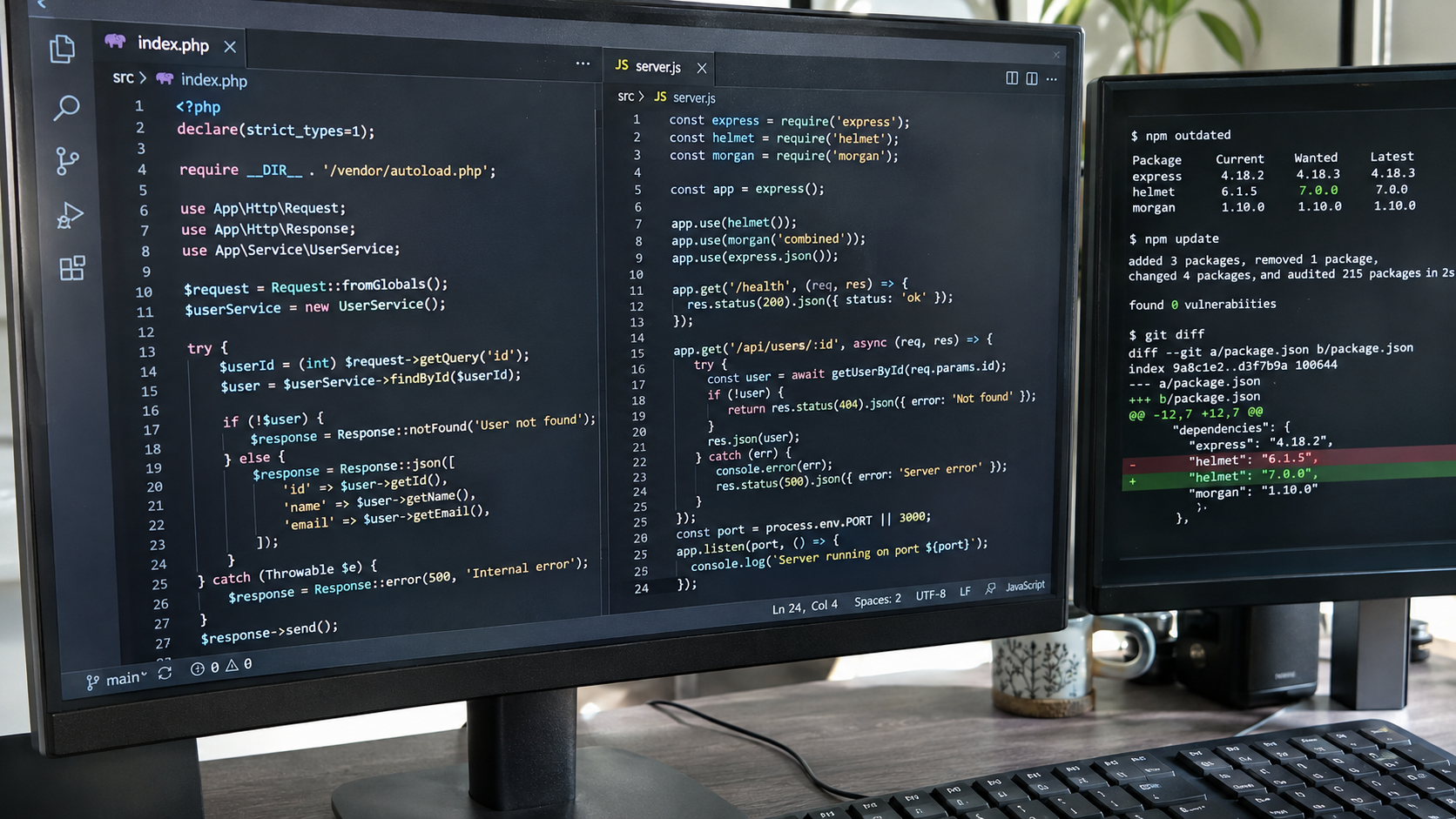
The incidents extend beyond PHP and WordPress. A separate vulnerability in the widely used Brotli compression library has prompted updates across Node.js, Microsoft .NET and other software, including packages used by Python and Java applications.
For South African businesses, the implications reach from online shops and booking websites to customer portals and custom business systems. Different platforms can share the same underlying components, allowing one security flaw to create work across several technology environments.
SEVERAL INCIDENTS, A WIDER MAINTENANCE CHALLENGE
On 21 October, the PHP project released emergency fixes for two critical vulnerabilities collectively known as PHP2Shell. Under certain conditions, the flaws can allow an attacker to execute code without logging in.
Separately, a flaw in Brotli’s handling of compressed data created risks for applications that process malicious input using an affected version of the library.
Microsoft issued out-of-band .NET security updates on 25 October. Its guidance explains that exposure depends on whether an application uses the affected decompression functions; the older .NET Framework is not affected by that particular flaw.
The distinction is important. These incidents do not mean every website written in a particular language is vulnerable in the same way. They mean businesses and their technical providers must identify the components they actually run and apply the relevant fixes.
WHY THE SCALE REACHES MILLIONS
Internet intelligence company Censys described the PHP incident as involving tens of millions of internet-facing PHP services.
Shared software helps explain that reach. A component maintained by one development team may be incorporated into hosting platforms, business applications and tools used around the world.
That creates a substantial potential exposure, but it is not evidence that millions of websites were successfully hacked.
In an update dated 28 October, Wordfence reported continued PHP2Shell scanning and exploitation attempts while stating that it was not aware of a WordPress compromise attributable to those flaws. That finding was specific to its visibility and the PHP incident; it did not establish that every affected system was safe.
WHAT THIS MEANS FOR WORDPRESS WEBSITES
WordPress runs on PHP, but updating WordPress does not update the server’s PHP installation.
This leaves an important gap for owners who assume that a dashboard showing no outstanding updates means the entire website environment is current.
WordPress core, plugins and themes require maintenance. The hosting software beneath them requires separate attention. Where other affected components are bundled into an application or server package, those components also need to be addressed.
The PHP project’s later release of updated Windows packages containing a Brotli fix illustrates how these responsibilities can overlap.
LOCAL SUPPORT HELPS BUSINESSES RESPOND
Mysatech says it has been helping companies upgrade and repair their websites in response to the recent security problems.
For businesses without an internal technical team, the immediate challenge is often establishing what needs attention and who controls it. A hosting provider may manage the server, while a separate developer maintains the website and its integrations.
Coordinating those responsibilities matters. An upgrade needs to address the affected software while preserving the functions customers rely on, from enquiry forms to online purchases.
The work also needs a clearly defined outcome. Applying a fix addresses a known vulnerability; it does not make a website permanently immune to future threats.
THE WORK CONTINUES AFTER THE PATCH
Microsoft’s guidance distinguishes between services it maintains and resources customers must update themselves. That includes software installed independently and applications carrying their own copies of affected components.
For website owners, this makes a general assurance that “the server is updated” less useful than confirmation that the relevant applications and dependencies have also been checked.
The practical priority is to obtain that confirmation from the responsible provider and establish an ongoing maintenance arrangement.
October’s disclosures have reinforced a straightforward lesson for South African businesses: a website is a working system with continuing technical responsibilities. Keeping it dependable requires attention to what runs behind the pages as well as what customers see.
What's your reaction?
About Thabo Mokoena

Thabo Mokoena covers global technology news for Trustoria, bringing a South African perspective to artificial intelligence, cybersecurity, digital innovation and emerging platforms. Based in Pretoria, he makes complex developments accessible through clear, balanced reporting that explores how technology affects everyday life, business and opportunity.
READ FULL BIO →