
Three Hearts and Blue Blood: The Remarkable Body of an Octopus
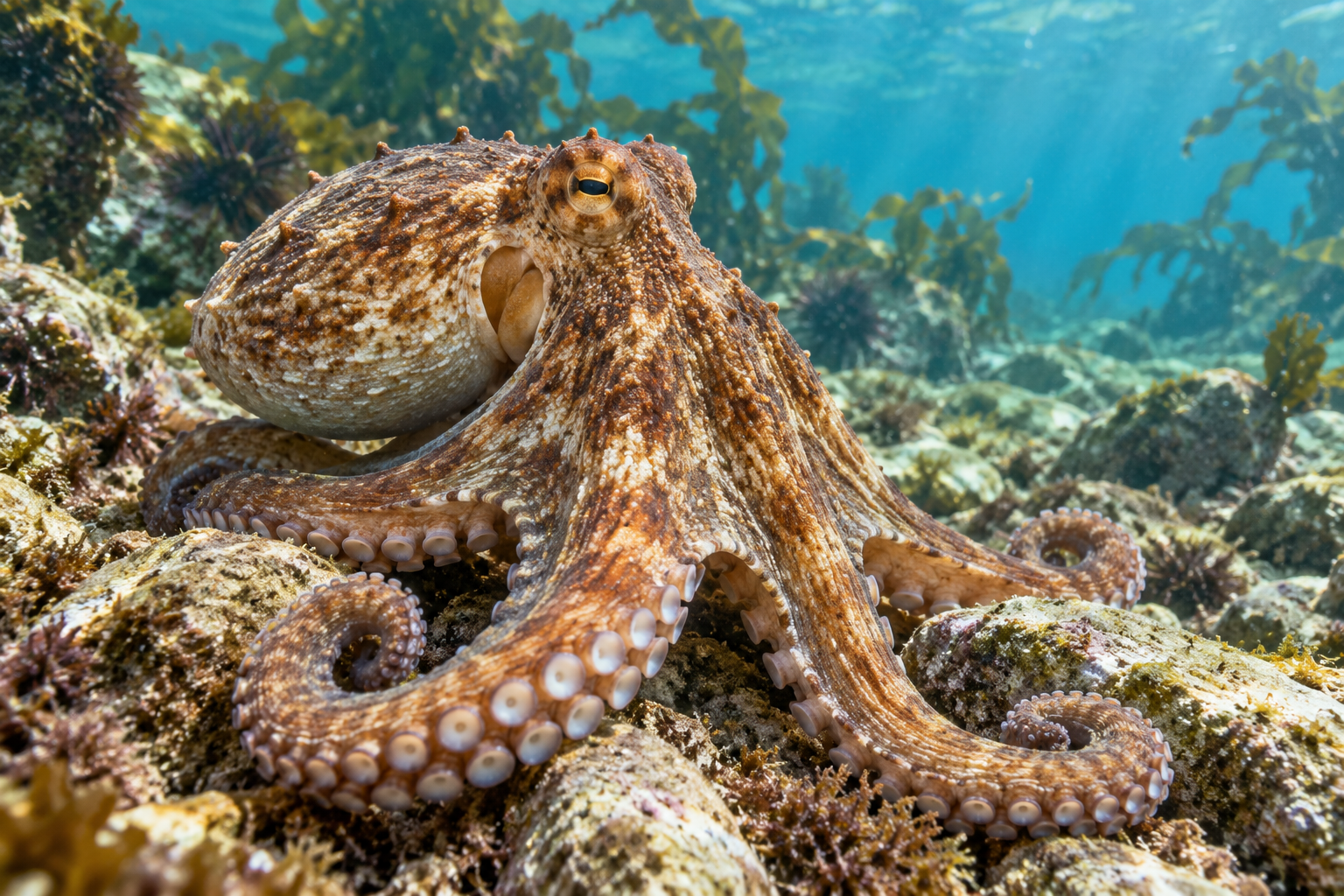
Behind its unusual anatomy lies a familiar challenge: getting oxygen to the parts of the body that need it.
WHY THREE HEARTS?
An octopus divides the pumping work between three hearts.
Two, known as branchial hearts, move blood through the gills, where it picks up oxygen. The third, called the systemic heart, circulates oxygenated blood around the body.
These hearts have different jobs within one connected system. Together, they keep blood moving through the places where oxygen is collected and then delivered.
It is a useful reminder that the human body offers just one example of how circulation can work.
WHAT MAKES THE BLOOD BLUE?
The explanation comes down to the molecule carrying the oxygen.
Human blood uses haemoglobin, an iron-containing protein. Octopuses use a different protein called haemocyanin, which contains copper.
When carrying oxygen, haemocyanin gives the blood its blue colour. When it loses that oxygen, the colour fades.
That detail makes the familiar phrase “blue blood” rather more literal underwater.
ARMS WITH LOCAL CONTROL
The octopus’s nervous system is equally interesting. Much of its nerve machinery is distributed through its arms, allowing them to perform some actions without constant instructions from the central brain.
This does not mean each arm is a separate animal. Local control works alongside coordination from the brain.
The Natural History Museum describes experiments in which octopuses learned to guide an arm through a maze towards food using visual information—evidence that the central brain can direct those movements.
FAMILIAR NEEDS, EXTRAORDINARY SOLUTIONS
It is easy to treat unusual animal facts as things to memorise: three hearts, eight arms, blue blood.
But the explanation is often more rewarding than the numbers. Each detail invites a question about how a living creature moves, senses its surroundings and keeps itself alive.
The octopus offers a particularly striking invitation to be curious. Beneath its unfamiliar appearance are the everyday demands of being alive, met in ways very different from our own.
What's your reaction?
About Angela Jacobs

Angela Jacobs writes knowledge articles, fun facts and features on fascinating topics for Trustoria. Born in Klerksdorp and based in Cape Town, she combines careful research with an engaging, accessible style, exploring everything from everyday curiosities to surprising discoveries. Her work invites readers to learn something new and discover the interesting stories behind familiar things.
READ FULL BIO →