
Why Does Rain Smell So Good? The Science Behind That Familiar Earthy Scent
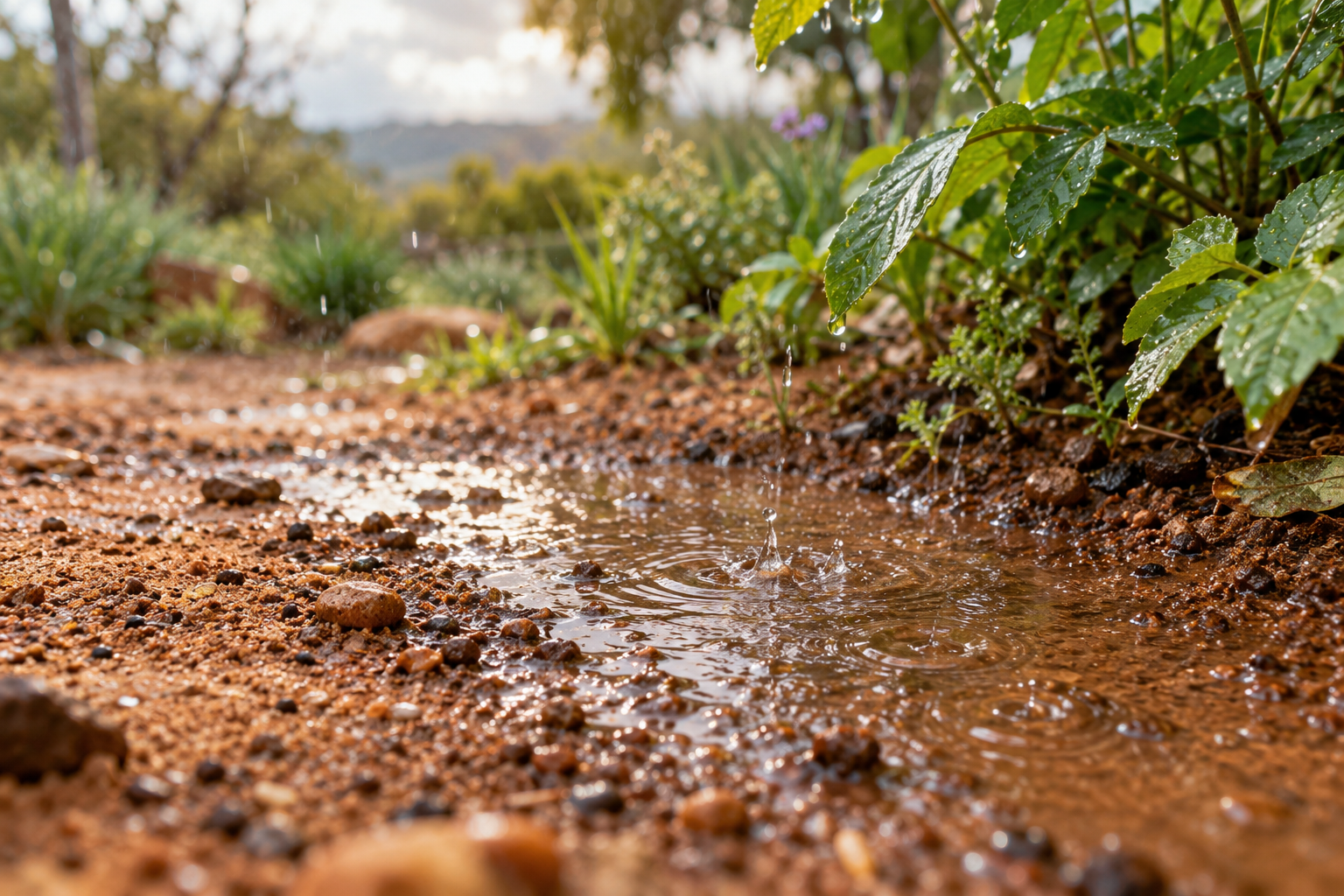
The answer begins beneath our feet.
THERE IS A WORD FOR IT: PETRICHOR
The distinctive scent associated with rain reaching dry ground is commonly called petrichor.
Australian researchers Isabel “Joy” Bear and Richard Thomas introduced the term in a scientific paper published in 1964. They investigated an aromatic oil associated with rocks and soil that could be released by moisture.
The name combines Greek words referring to stone and the mythical fluid said to flow through the veins of the gods. It is a rather poetic name for something many of us recognise from an ordinary afternoon shower.
THE SOIL HAS ITS OWN CHEMISTRY
Several natural substances contribute to the scent, including plant oils and a compound called geosmin.
Geosmin is produced by certain soil bacteria and has a characteristic earthy smell. Our noses are remarkably sensitive to it, allowing us to notice very small amounts.
Think of the scent after rainfall as a mixture. Its character can vary with the ground beneath the rain, the surrounding vegetation and the compounds available to be carried into the air.
HOW DOES THAT SMELL REACH YOUR NOSE?
In 2015, researchers at the Massachusetts Institute of Technology used high-speed cameras to examine raindrops hitting porous surfaces.
They observed something easily missed by the naked eye: a falling drop can trap tiny air bubbles where it meets the ground. Those bubbles rise through the water and burst, releasing a fine spray of airborne droplets known as aerosols.
The researchers proposed that this process helps transport aromatic substances from the ground into the air.
Picture the tiny bubbles bursting at the surface of a fizzy drink. Something similarly delicate can happen inside a raindrop, on a much smaller scale.
A GENTLE SHOWER CAN MAKE QUITE AN IMPRESSION
Interestingly, the MIT experiments found that light and moderate rainfall conditions could produce more aerosols than heavy rainfall.
A stronger downpour therefore does not automatically mean a stronger earthy scent. The speed of the drops and the properties of the surface both influence what happens.
A LITTLE WONDER IN AN EVERYDAY MOMENT
The next time rain reaches a dry patch of ground, that familiar smell may give you something new to think about.
Within a moment that feels wonderfully simple, there is chemistry in the soil and physics inside falling water.
Knowing the explanation does not take away the pleasure. It gives you another reason to pause and notice it.
What's your reaction?
About Angela Jacobs

Angela Jacobs writes knowledge articles, fun facts and features on fascinating topics for Trustoria. Born in Klerksdorp and based in Cape Town, she combines careful research with an engaging, accessible style, exploring everything from everyday curiosities to surprising discoveries. Her work invites readers to learn something new and discover the interesting stories behind familiar things.
READ FULL BIO →