AI That Speaks Our Languages: South Africa’s Push for More Accessible Learning
In an announcement published on 14 September 2026, the Council for Scientific and Industrial Research (CSIR) outlined locally developed language technologies for an education showcase scheduled for 16 September.
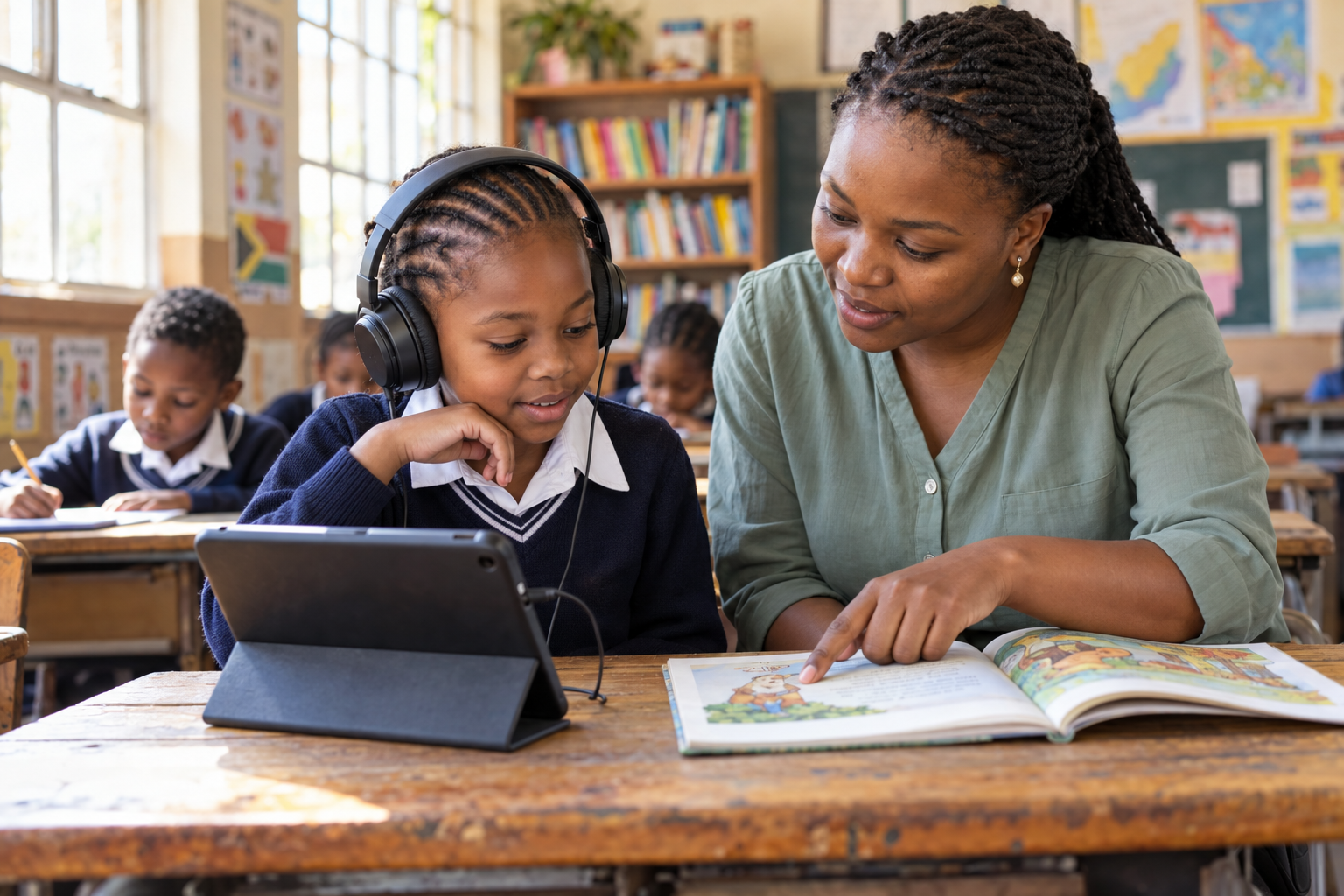
The programme brings together speech technology, reading support and conversational AI, with an emphasis on South African learners and communities.
FROM WRITTEN WORDS TO FAMILIAR VOICES
One of the technologies is Qfrency, the CSIR’s text-to-speech system, which generates spoken audio from written text in South Africa’s 11 official spoken languages.
The CSIR’s published account of Qfrency’s development describes the difficulties its researchers encountered when adapting systems originally designed around English. Those challenges helped drive the development of technology specifically suited to multilingual use.
Its applications extend beyond education. The organisation identifies screen readers, chatbots and automated telephone services among the systems that can use the technology.
This gives the work relevance to businesses and public services as well as classrooms: written information can also be delivered through speech.
READING SUPPORT BUILT AROUND LOCAL NEEDS
The September programme also included Ngiyaqonda, described by the CSIR as a literacy platform offering personalised learning pathways, pronunciation feedback and culturally relevant material to support reading in a learner’s home language.
Other planned demonstrations covered multilingual story generation for young children and an educational chatbot operating through WhatsApp.
The announcement describes intended capabilities and potential benefits. It does not provide independently verified evidence of improved reading results or establish that every demonstrated tool is publicly available.
WHAT THIS COULD MEAN FOR SOUTH AFRICAN DEVELOPERS
Our assessment is that this work highlights an important opportunity for local software businesses: designing around the people who will actually use a product.
For example, a learning platform could offer written instructions alongside spoken explanations. A customer-service system could make information easier to access in a preferred language. These are potential applications, rather than confirmed deployments arising from the September announcement.
Successful implementation would still require careful testing. Developers would need to assess pronunciation, meaning, usability and the suitability of content for its intended audience.
THE VALUE WILL BE IN EVERYDAY USE
The strongest measure of educational technology is whether it helps people learn. For these tools, the next questions concern practical access, classroom evaluation and evidence of sustained benefit.
The local focus gives this research particular significance. It places South African languages within the design of digital tools from the beginning, opening possibilities for services that more people can understand and use confidently.
What's your reaction?
About Thabo Mokoena

Thabo Mokoena covers global technology news for Trustoria, bringing a South African perspective to artificial intelligence, cybersecurity, digital innovation and emerging platforms. Based in Pretoria, he makes complex developments accessible through clear, balanced reporting that explores how technology affects everyday life, business and opportunity.
READ FULL BIO →