
Growing Hope Together: South Africans Protect Nature and Create Local Opportunities
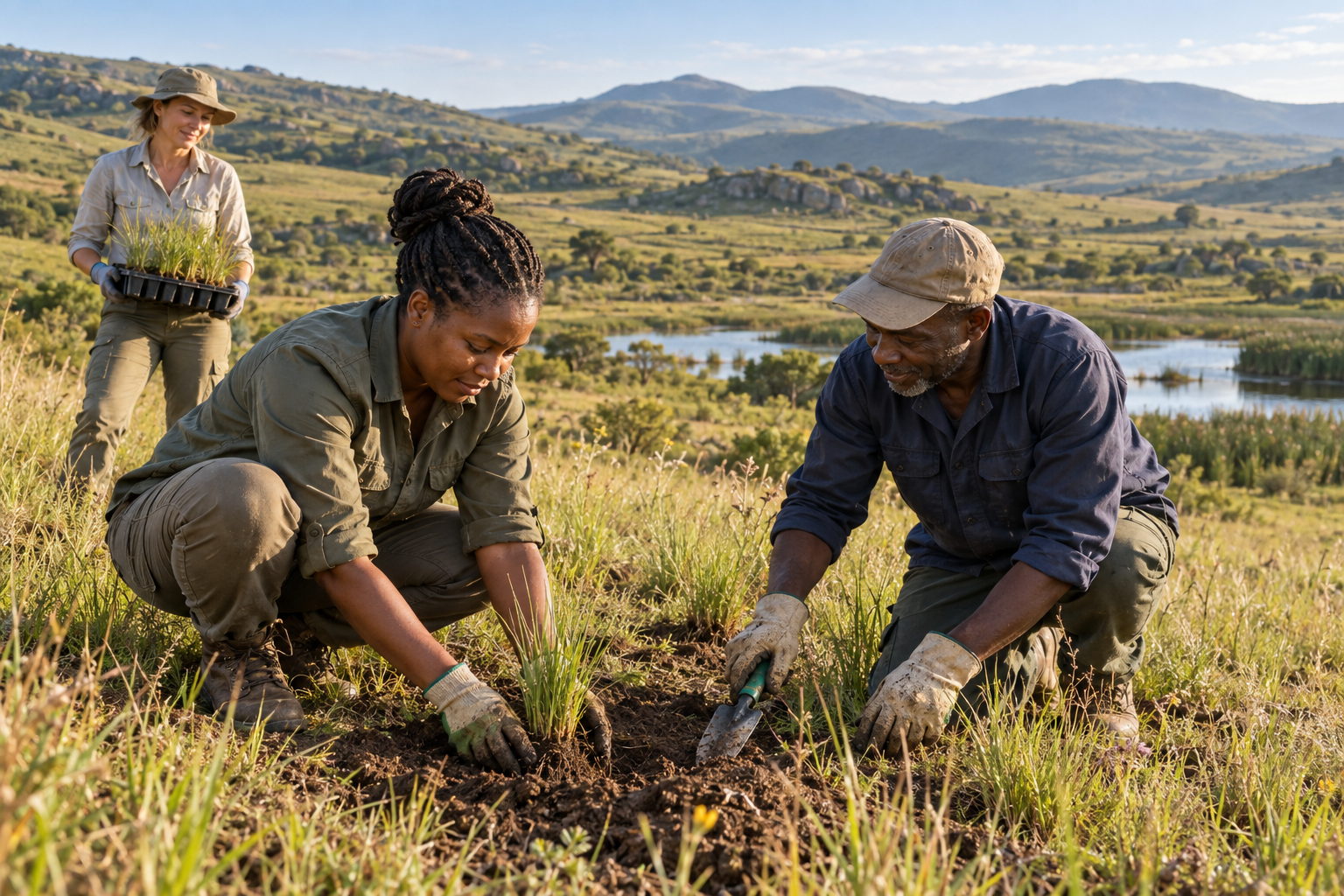
Across South Africa, that commitment has grown into a conservation achievement worth celebrating. Findings published in September 2026 show that biodiversity stewardship partnerships have secured 2.76 million hectares across 469 sites over two decades.
Behind that national milestone are communities, landowners, conservation organisations and public institutions working together to look after the landscapes they share.
PROTECTING THE PLACES PEOPLE CALL HOME
Biodiversity stewardship allows private and communal landowners to enter voluntary conservation agreements. These arrangements recognise the people who own and manage the land as important partners in its future.
The World Bank’s assessment, developed with SANBI and technical support from the Department of Forestry, Fisheries and the Environment, drew on interviews, workshops and engagement with traditional communities.
It found that the programme protects more than 650,000 hectares of strategic water source areas and supports livelihoods in rural and communal landscapes.
That gives the achievement a meaning beyond the boundaries on a map. It connects care for the natural environment with the places where people live, work and build their futures.
LOCAL WORK WITH LASTING VALUE
Among the examples highlighted by SANBI is Babanango Game Reserve, where partnerships have supported the clearing of more than 1,500 hectares of invasive alien vegetation. Forty local community members have been trained and employed through natural resource management programmes.
SANBI also points to Nambiti Private Game Reserve, where conservation and tourism have supported more than 220 jobs alongside community ownership and revenue-sharing.
These are different projects with their own histories, but both make the human value of conservation easier to see: skills being developed, work being created and local people participating in the care of their surroundings.
A PLACE FOR COMMUNITIES IN CONSERVATION
In KwaZulu-Natal, SANBI identifies the Mgundeni Community Protected Environment as another encouraging example, bringing together sustainable farming, conservation and participation by women and young people.
The wider assessment emphasises the importance of lasting relationships with landowners, cooperation between government and non-profit organisations, and experienced people who can support projects over time.
It also calls for stronger coordination and sustained support to build on the progress already made.
SOMETHING WORTH PASSING ON
What makes this story moving is the patience behind it. Twenty years of progress means returning to the work, maintaining relationships and continuing to care when the results take time.
For readers, it offers a welcome reason to feel proud of South Africa: people from different backgrounds have found practical ways to protect something they value together.
The achievement belongs to the landscapes, but also to the people helping to keep them alive for those who will come after them.
What's your reaction?
About Zanele Mthembu

Zanele Mthembu covers South African community news for Trustoria, focusing on municipal developments, social justice and local culture. Based in Durban and rooted in her Zulu heritage, she brings clarity and compassion to stories that affect everyday lives, combining a commitment to accountability with a passion for highlighting community achievements, resilience and positive change.
READ FULL BIO →