
Why Are Flamingos Pink? The Colourful Secret Hidden in Their Food
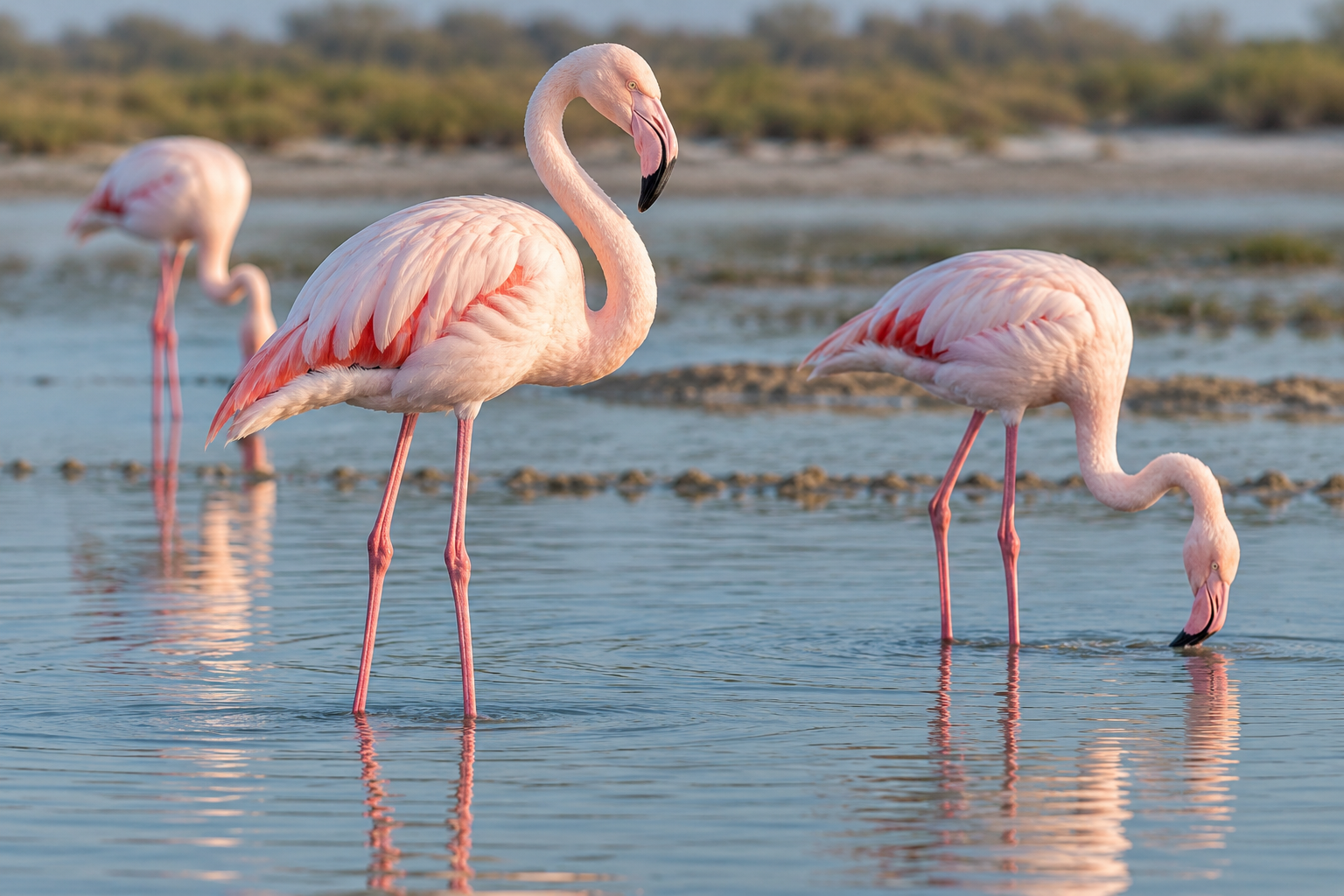
PINK STARTS ON THE MENU
Flamingos get their colour from natural pigments called carotenoids.
These pigments occur in algae and can pass through the food chain into small animals such as brine shrimp. When flamingos consume pigment-rich food, their bodies process the compounds and incorporate colour into their growing feathers.
Carotenoids also give familiar foods, including carrots and tomatoes, their orange and red colours.
So a flamingo’s appearance tells a story that begins with organisms far smaller than the bird itself.
A VERY DIFFERENT BABY PICTURE
Flamingo chicks hatch covered in pale grey or whitish down, with relatively straight bills. The familiar adult appearance develops as they grow.
Their first meals are unusual too. Both parents can produce a nutritious secretion from the upper digestive tract, commonly called crop milk, to feed their chick.
Despite its name, this is a bird-produced secretion rather than the milk made by mammals.
According to San Diego Zoo, parents can become noticeably paler while feeding their young, eventually regaining their colour as the chicks become independent.
DINNER IS SERVED UPSIDE DOWN
Watch a feeding flamingo and you may notice its head turned upside down in the water.
Its tongue pumps water through its bill, while comb-like structures help separate food from the water.
Different flamingo species have different filtering equipment. Lesser flamingos can collect very fine food particles, including algae, while larger species such as greater flamingos take a range of small aquatic animals.
That distinctive curved bill is therefore much more than part of a memorable silhouette. It is specialised feeding equipment.
WHY ZOO FLAMINGOS STAY PINK
Flamingos in human care do not have to rely on finding the same foods available in wild wetlands.
San Diego Zoo feeds its flamingos specially formulated pellets containing the nutrients and pigments they need. Their diet supports both their health and their characteristic colour.
A COLOUR WITH A STORY
It is easy to admire a flamingo simply because it is beautiful. Understanding where its colour comes from makes that beauty more interesting.
The pink feathers connect a bird to its meals, its feeding habits and the watery habitat that supports it.
The next time you see a flamingo, look beyond the colour for a moment. Watch the bill moving through the water and the patient rhythm of feeding. You are seeing part of the process that makes the bird so recognisable.
What's your reaction?
About Angela Jacobs

Angela Jacobs writes knowledge articles, fun facts and features on fascinating topics for Trustoria. Born in Klerksdorp and based in Cape Town, she combines careful research with an engaging, accessible style, exploring everything from everyday curiosities to surprising discoveries. Her work invites readers to learn something new and discover the interesting stories behind familiar things.
READ FULL BIO →