
The Tech We Leave Behind: South African Campaign Collects Over Two Tonnes of E-Waste
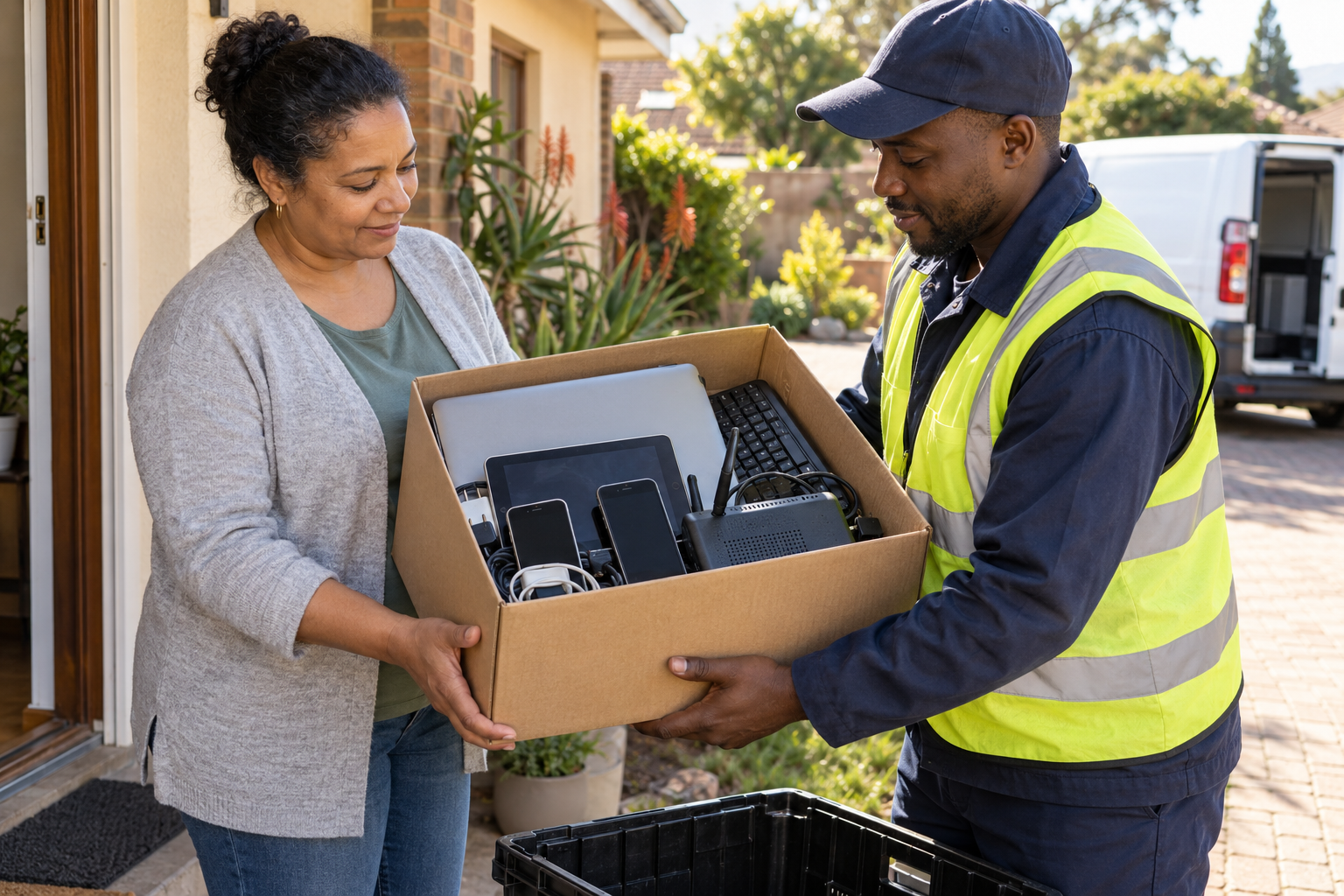
A South African recycling campaign has demonstrated how much unwanted equipment can emerge when collecting it becomes easier.
In results published on 2 September 2026, Vodacom said its Turn Your E-Waste into Rewards Challenge, delivered with Circular Energy NPC, collected more than 2,270 kilograms of electronic waste through 114 home collections across eight provinces.
BRINGING COLLECTION TO THE FRONT DOOR
Gauteng contributed more than 1,330 kilograms, followed by KwaZulu-Natal with 609.8 kilograms and the Western Cape with 307 kilograms, according to Vodacom.
The challenge offered participants free home collections. It formed part of a partnership established in 2024 to improve the collection and responsible processing of unwanted electronics.
The results are company-reported campaign figures. They show participation in a specific initiative, rather than a national recycling rate.
A MUCH BIGGER TECHNOLOGY CHALLENGE
The wider scale is substantial. The Global E-waste Monitor 2024, prepared by ITU and UNITAR with Fondation Carmignac, reports that the world generated 62 million tonnes of electronic waste in 2022.
Only 22.3% was documented as formally collected and recycled in an environmentally sound manner.
Those are global figures for 2022, not South African figures for 2026. They nevertheless provide important context: recovering discarded electronics remains a major challenge alongside the growth of the digital economy.
WHAT HAPPENS AFTER THE UPGRADE?
For South African households and businesses, the story raises a practical question that often receives less attention than choosing a new device: what happens to the equipment it replaces?
Circular Energy describes its work as a nationwide take-back system covering electrical and electronic equipment, batteries and other specified waste categories. Its approach includes collection, recycling and environmentally sound processing.
That places the end of a product’s life within a managed process, rather than leaving disposal entirely to the person who bought it.
AN OPPORTUNITY FOR BETTER BUSINESS HABITS
Our assessment is that the campaign offers a useful lesson for businesses planning technology upgrades. A purchasing decision can include a plan for the outgoing equipment.
That might mean assessing whether a device remains useful, whether it can be repaired or transferred, and how equipment that has reached the end of its life will enter a responsible collection system.
These are practical considerations, rather than a claim that every collected device can be refurbished or that recycling recovers every component.
PROGRESS THAT NEEDS TO BECOME ROUTINE
A single campaign cannot resolve the wider e-waste problem. Its value is in demonstrating participation and providing a concrete example of how collection can work.
The next question is whether that behaviour can become routine, supported by services people understand and can access consistently.
South Africa’s technology future will be shaped by the systems it builds and the devices it adopts. It will also be shaped by how responsibly it manages the equipment left behind.
What's your reaction?
About Thabo Mokoena

Thabo Mokoena covers global technology news for Trustoria, bringing a South African perspective to artificial intelligence, cybersecurity, digital innovation and emerging platforms. Based in Pretoria, he makes complex developments accessible through clear, balanced reporting that explores how technology affects everyday life, business and opportunity.
READ FULL BIO →